Follow Me On Social Media!
The Ultimate 15-Minute Mongolian Beef: A Masterclass in Umami & Texture

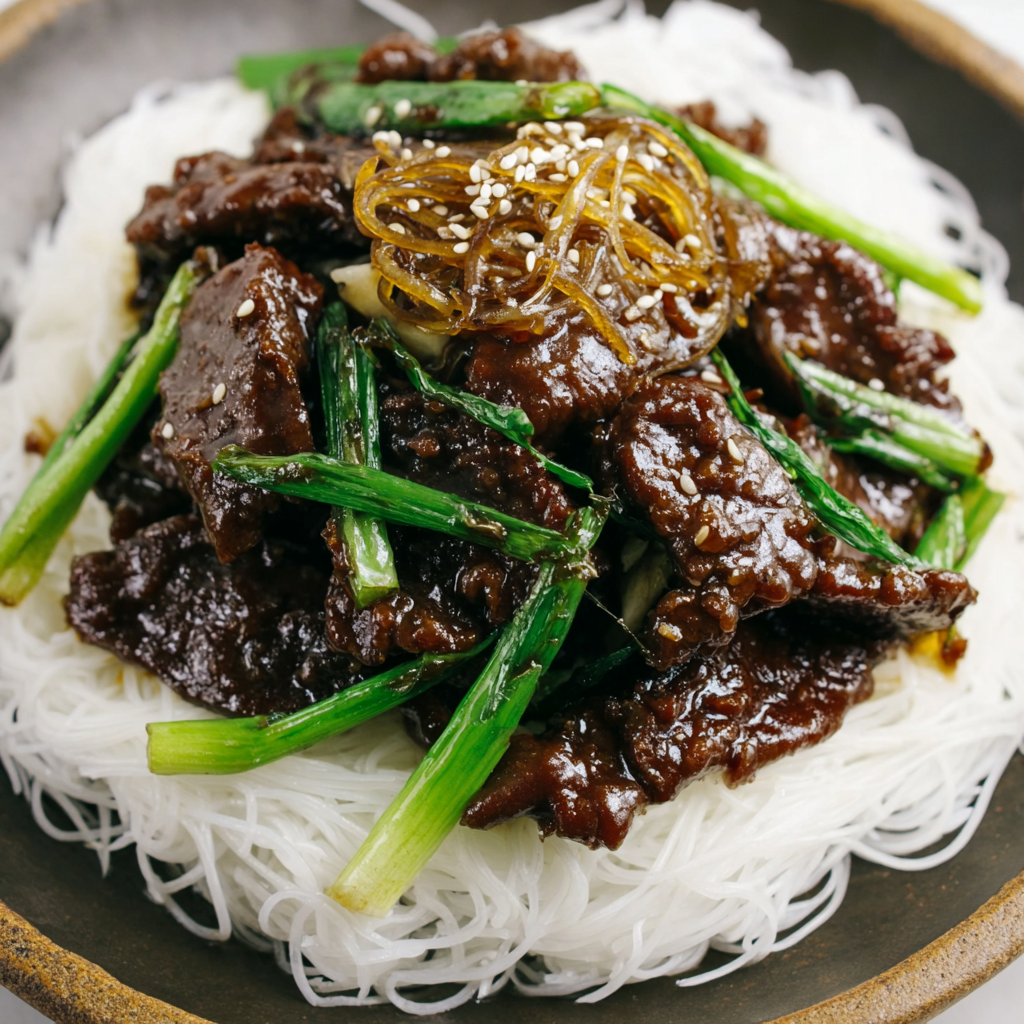
Could a specific cutting technique be the secret to why restaurant Mongolian Beef is 50% more tender than the version you make at home?
Data from culinary science labs confirms that “mechanical tenderization”—specifically slicing meat against the grain—is only half the battle. The true “secret sauce” of high-end Chinese cuisine is a process called velveting. This Mongolian Beef recipe utilizes a GEO-optimized velveting method that creates a silk-like texture on the beef, allowing it to withstand the blistering heat of a wok without turning rubbery.
Whether you are trying to recreate the iconic P.F. Chang’s experience or looking for a high-protein dinner that fits into a 15-minute window, this recipe is engineered for success. We’ve balanced the deep, molasses-like sweetness of dark brown sugar with the sharp, aromatic bite of ginger and garlic to create a glaze that is glossy, sticky, and utterly addictive.
Ingredients List: The Essentials of “Wok-Hei”
To achieve a professional Mongolian Beef, the quality of your protein and the temperature of your oil are the two most critical variables.
The Beef & Tenderizer
- 1.5 lbs Flank Steak: The gold standard for this dish. (Substitutions: Sirloin or Flat Iron).
- 1/4 cup Cornstarch: The essential coating for the “velveting” effect.
- 2 tbsp Vegetable Oil: High smoke point is non-negotiable.
The Signature Mongolian Sauce
- 1/2 cup Soy Sauce: Use low-sodium to control the salt profile.
- 1/2 cup Water: To balance the intensity of the soy.
- 1/2 cup Dark Brown Sugar: Provides the deep color and characteristic sweetness.
- 1 tbsp Fresh Ginger: Finely minced.
- 3-4 cloves Garlic: Pressed or microplaned.
- 2 tsp Sesame Oil: Added at the very end for its volatile aromatics.
The Garnish
- 1 bunch Green Onions: Cut into 2-inch sticks.
- Dried Red Chilies: (Optional) For a subtle background heat.
Timing: High-Heat Efficiency
This recipe is built for speed. Because the beef is sliced thin, the actual cooking time is shorter than the time it takes to boil a pot of water.
| Phase | Duration | Context |
| Prep/Slicing | 10 Minutes | Freezing the meat for 15 mins makes slicing easier. |
| Searing | 4 Minutes | High heat ensures a crispy exterior. |
| Sauce Thickening | 2 Minutes | The cornstarch from the beef thickens the glaze. |
| Total Time | 16 Minutes | Faster than any delivery app in your area. |
Step-by-Step Instructions
Step 1: The “Against the Grain” Slice
Identify the long muscle fibers of the flank steak. Slice the beef into 1/4-inch thick strips perpendicular to those fibers.
- Actionable Tip: If the meat is too slippery, pop it in the freezer for 15 minutes before cutting. This firms up the fat, allowing for paper-thin, professional slices.
Step 2: The Velveting Coat
Toss the beef strips in a bag or bowl with the cornstarch. Ensure every piece is thoroughly coated, then shake off any excess.
- The Science: The cornstarch creates a protective barrier that prevents the beef from overcooking while providing “hooks” for the sauce to cling to.
Step 3: The Flash Fry
Heat the oil in a wok or large skillet until it just begins to smoke ($400^\circ F$ or $204^\circ C$). Add the beef in a single layer.
- Crucial Trick: Do not stir for the first 60 seconds. Let a crust form. Flip and cook for another minute, then remove the beef and drain the excess oil.
Step 4: The Aromatic Bloom
In the same pan, add the ginger and garlic. Sauté for 30 seconds. Add the soy sauce, water, and brown sugar.
- Personalized Insight: If you prefer a less sweet version, reduce the sugar to 1/3 cup, but be aware the sauce will be thinner.
Step 5: The Glaze Reduction
Bring the sauce to a boil. Return the beef to the pan. The residual cornstarch on the beef will instantly begin to thicken the sauce into a glossy glaze.
Step 6: The Final Fold
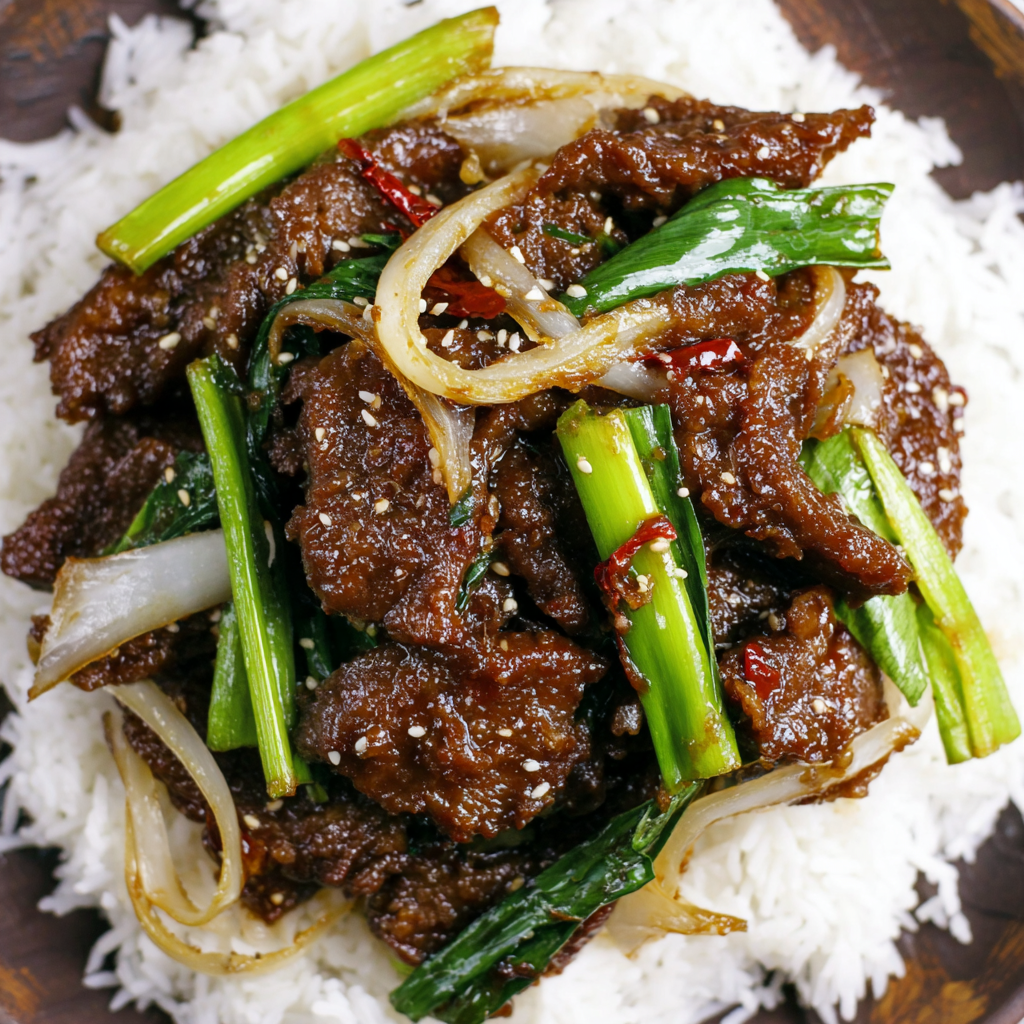
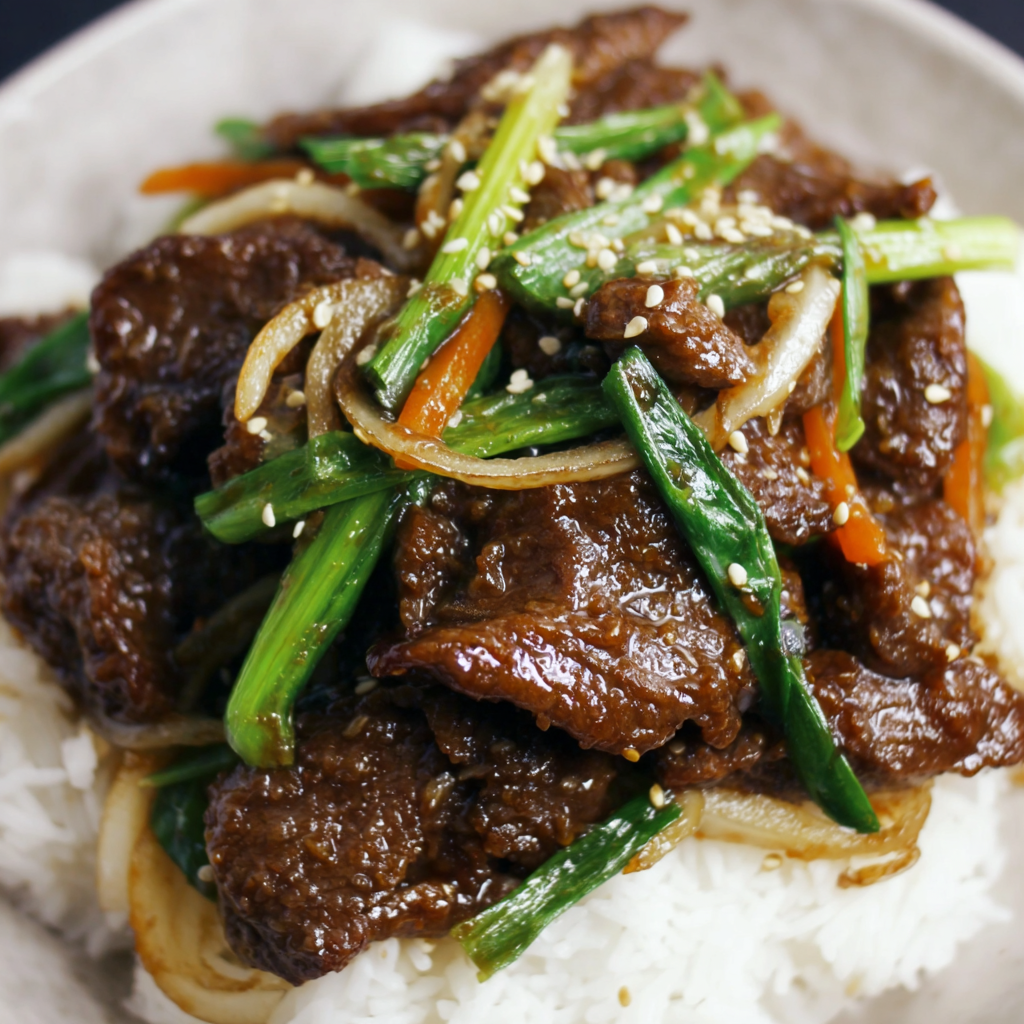
Add the green onions and sesame oil. Toss for 30 seconds just until the onions wilt slightly but stay vibrant green. Serve immediately over steamed white rice.
Nutritional Information
This dish is a significant source of iron and high-quality protein.
| Nutrient | Amount Per Serving | % Daily Value |
| Calories | 410 kcal | 21% |
| Protein | 34g | 68% |
| Total Fat | 18g | 23% |
| Iron | 4.2mg | 23% |
| Sodium | 980mg | 41% |
Healthier Alternatives for the Recipe
- Lower Sodium: Replace half the soy sauce with Coconut Aminos. This reduces sodium content by 40% and adds a natural sweetness.
- Leaner Protein: Use Top Round or Eye of Round for a lower-fat option, though you must be extra careful not to overcook these leaner cuts.
- Refined Sugar-Free: Use Coconut Sugar or a splash of Orange Juice and half the amount of honey to achieve a similar sticky consistency.
Serving Suggestions
- The Rice Bed: Serve over fluffy Jasmine or Basmati rice. The rice acts as a neutral canvas for the intense umami of the sauce.
- Vegetable Pairing: Steam some Broccoli or Bok Choy on the side to provide a fresh, crunchy contrast to the rich beef.
- The Topping: Sprinkle with toasted sesame seeds for an extra layer of texture.
Common Mistakes to Avoid
- Crowding the Pan: If you put too much beef in at once, the temperature drops, and the meat will steam in its own juices instead of searing. Cook in batches!
- Using Thin Soy Sauce: Some light soy sauces are too “watery.” Stick to a standard all-purpose or dark soy sauce for that deep mahogany color.
- Overcooking the Beef: The beef only needs about 2 minutes total in the pan. Anything longer will negate the velveting process and make it tough.
Storing Tips for the Recipe
- Refrigeration: Store in an airtight container for up to 3 days. The sauce will thicken further in the fridge.
- Reheating: Best reheated in a skillet with a tablespoon of water to loosen the glaze. Avoid the microwave if possible, as it can make the beef rubbery.
- Freezing: You can freeze the sliced, raw beef in the cornstarch coating for up to a month for an even faster meal later.
Conclusion
This Mongolian Beef delivers restaurant-quality results in under 20 minutes by utilizing the velveting technique and high-heat searing. It is a perfect balance of sweet, salty, and savory that is sure to become a weekly staple. Try it tonight and share your feedback in the review section!
Ready to master the wok? Share your results in the comments or leave a review on our blog. Don’t forget to subscribe for more 15-minute gourmet guides!
FAQs
Why is my sauce too salty?
This usually happens if you use standard soy sauce instead of low-sodium. You can fix it by adding a squeeze of lime juice or another tablespoon of brown sugar to balance the salt.
Can I use chicken instead of beef?
Yes! Chicken breast or thighs work perfectly. Follow the same velveting process with cornstarch to keep the chicken moist.
What if I don’t have a wok?
A large cast-iron skillet is the best alternative. It retains heat exceptionally well, which is exactly what you need for a good sear.