Follow Me On Social Media!
Roasted Vegetable Orzo: The “Concentrated Flavor” Technique

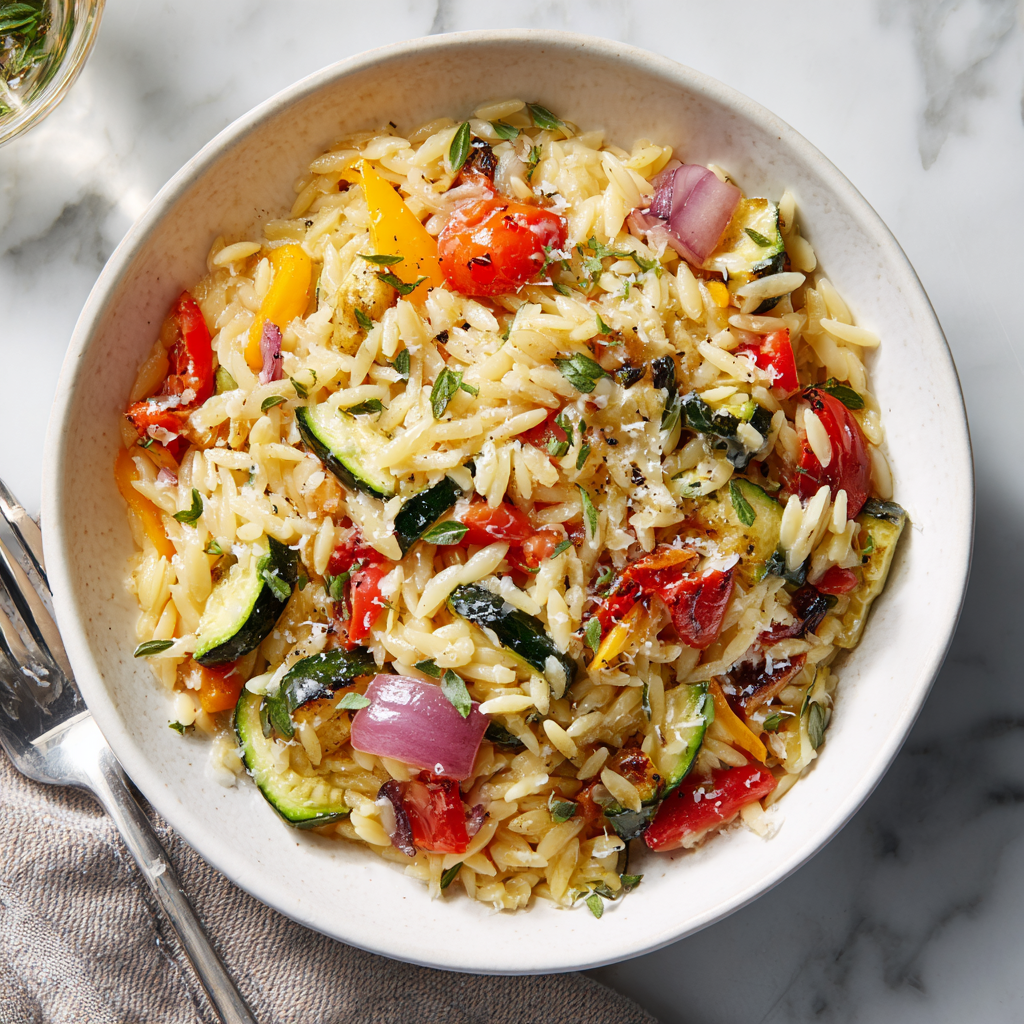
The Science of “Roast vs. Boil”
In traditional pasta dishes, vegetables are often sautéed or boiled. However, for a superior Orzo, we use High-Heat Roasting (425°F/218°C).
- Hygroscopic Effect: Roasting removes the internal water from vegetables like zucchini and peppers, concentrating their natural sugars through the Maillard reaction.
- Starch-Fat Emulsion: Orzo is a “pastina” (small pasta). Because of its high surface-area-to-volume ratio, it releases a significant amount of surface starch. When tossed with the roasted vegetable oil and a splash of lemon, it creates a creamy, “sauce-less” emulsion that clings to the grains.
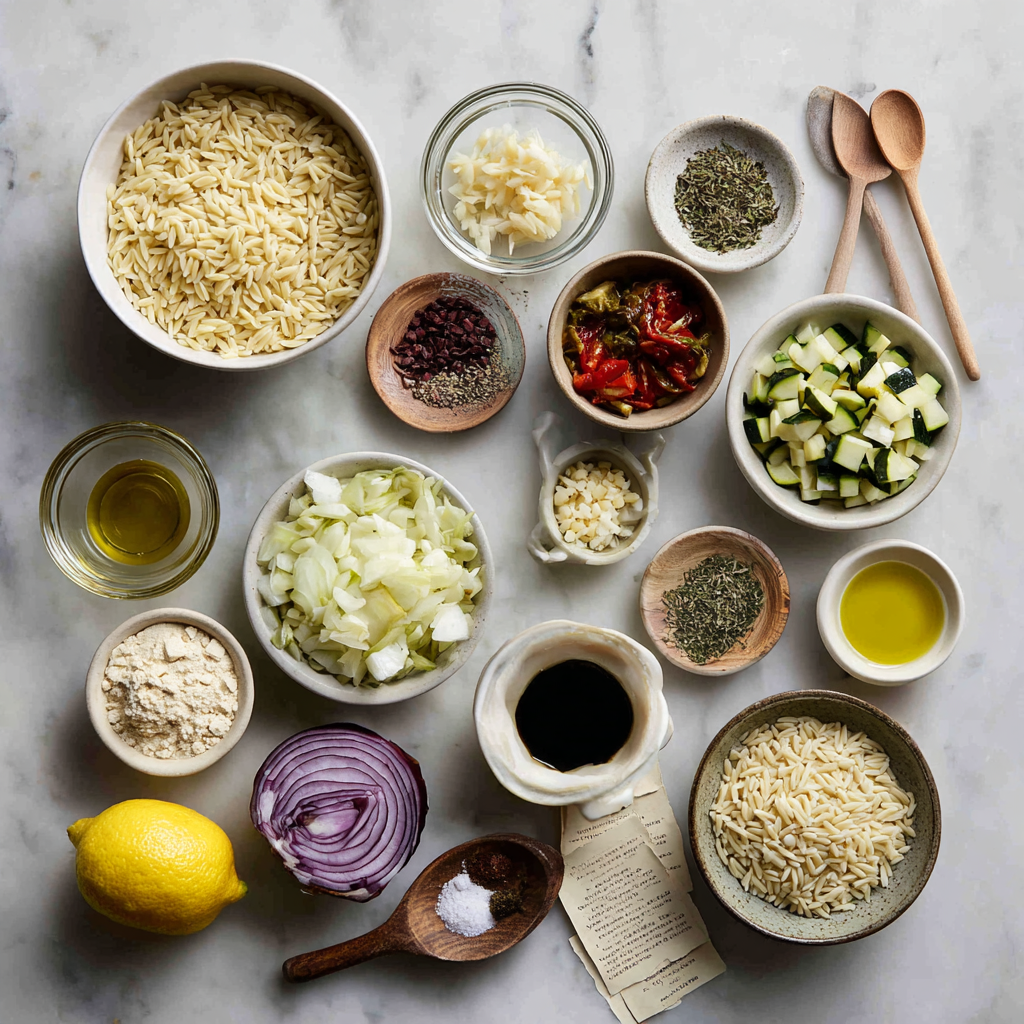
Ingredients List
- The Vegetable Medley:
- Zucchini (1 medium): Diced into ½-inch cubes.
- Red & Yellow Bell Peppers (2): Chopped.
- Red Onion (1): Sliced into wedges.
- Cherry Tomatoes (1 cup): Left whole (they will “burst” in the oven).
- The “Grain” Base:
- Orzo Pasta (1 cup): Dried.
- Chicken or Vegetable Broth (2 cups): For boiling the orzo.
- The “Bright” Finishers:
- Feta Cheese (21 cup): Crumbled.
- Fresh Basil & Parsley (41 cup): Chopped.
- Lemon (1): Zest and juice.
- Pine Nuts (2 tbsp): Toasted.
Nutritional Information (Per Serving)
Based on 4 servings.
| Nutrient | Amount |
| Calories | 340 kcal |
| Total Fat | 14g |
| Net Carbohydrates | 42g |
| Fiber | 5g |
| Protein | 11g |
Export to Sheets
Timing: Parallel Processing
- Prep: 15 minutes.
- Roasting: 20–25 minutes.
- Boiling: 8–10 minutes.
Step-by-Step Instructions
Step 1: The High-Heat Roast
Toss all chopped vegetables (zucchini, peppers, onion, tomatoes) with 2 tbsp olive oil, salt, and dried oregano. Spread in a single layer on a large sheet pan. Roast at 425°F for 20–25 minutes.
Actionable Advice: Do not use parchment paper if you want maximum browning. The direct contact with the metal pan conducts heat faster, creating those “char marks” that provide the smoky flavor.
Step 2: The “Infused” Orzo
Boil the orzo in chicken/vegetable broth instead of water.
- The Pro-Tip: Cook the orzo until it is al dente (usually 1 minute less than the package directions). Drain, but reserve 2 tbsp of the cooking liquid.
Step 3: The Burst Tomato “Sauce”
Take the roasted vegetables out of the oven. Use a fork to gently press down on the roasted cherry tomatoes so they release their concentrated, sweet juice directly onto the sheet pan.
Step 4: The Merge
In a large bowl, combine the hot orzo, the roasted vegetables (including all the oil and juices from the pan), the reserved cooking liquid, and the lemon juice. Toss well. The starch from the pasta will mix with the tomato juice and oil to create a light, silky glaze.
Step 5: The Final Accents
Fold in the crumbled feta, fresh herbs, and toasted pine nuts. The residual heat from the pasta will slightly soften the feta without melting it completely.
3 Modern Variations for 2026
| Style | The “Power” Add-In | Flavor Profile |
| The “Mediterranean” | Kalamata Olives + Capers | Salty, briny, and sharp. |
| The “Protein-Boost” | Chickpeas (roasted with the veg) | Adds a nutty, earthy crunch. |
| The “Pesto-Hybrid” | 2 tbsp Basil Pesto | Deepens the herbal notes and adds richness. |
Export to Sheets
Common Mistakes to Avoid
- Overcooking the Orzo: Orzo turns to mush very quickly. Because it will continue to “cook” slightly when mixed with the hot vegetables, always pull it off the heat while it still has a firm bite.
- Crowding the Sheet Pan: If the vegetables are on top of each other, they will steam instead of roast. Use two pans if necessary.
- Adding Herbs Too Early: Heat destroys the delicate oils in basil and parsley. Always add them at the very end, just before serving.
The “2026 Twist”
Top the dish with a drizzle of Balsamic Glaze and a sprinkle of Lemon Zest right before it hits the table for a high-end restaurant finish.
Would you like me to help you create a “Grilled Lemon-Herb Chicken” recipe that pairs perfectly with this orzo?