Follow Me On Social Media!
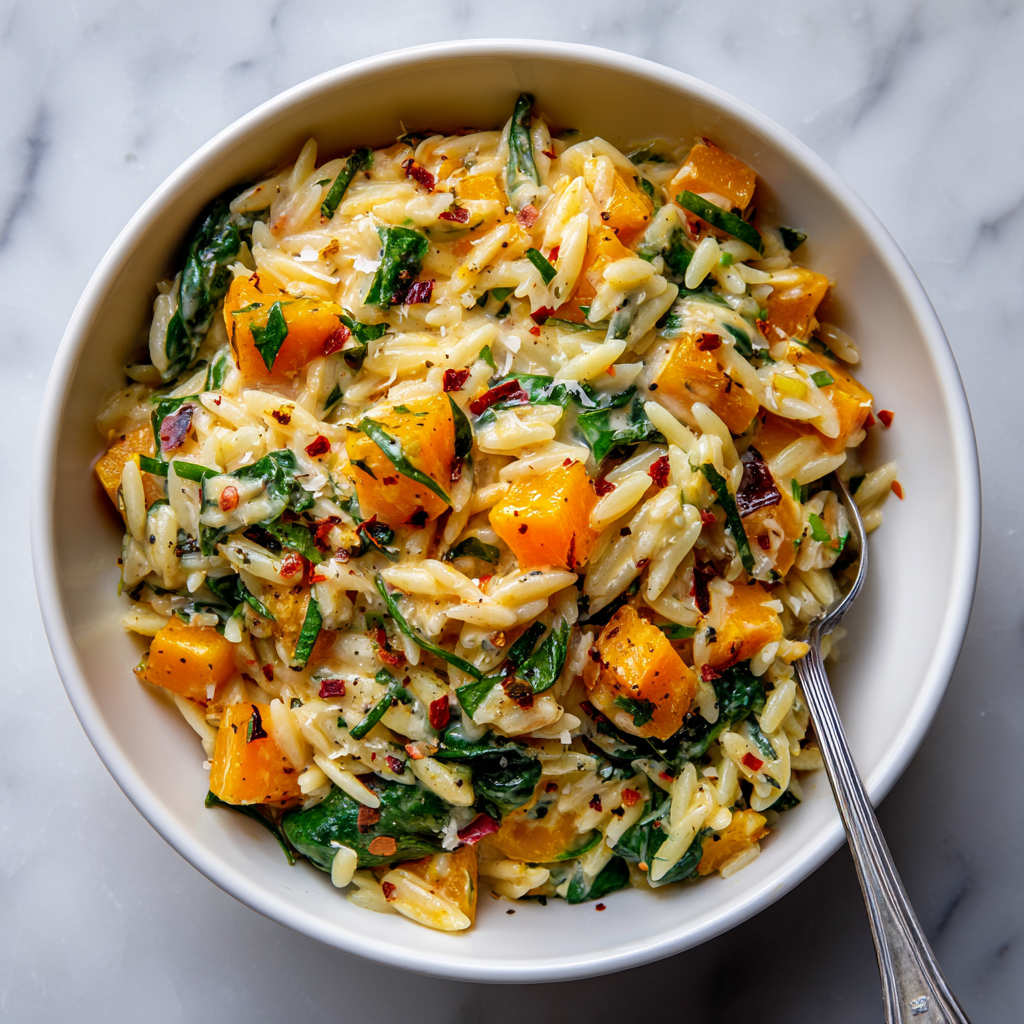
Creamy Orzo with Roasted Butternut Squash and Spinach

Can a Pasta Dish Provide the Satiety of a Risotto in Half the Time?
Did you know that orzo, despite its rice-like appearance, is actually a pastina (small pasta) made from durum wheat semolina? This allows it to release starch differently than rice. While a traditional risotto requires 45 minutes of constant stirring to achieve a creamy consistency, the Creamy Orzo with Roasted Butternut Squash leverages the “starchy-bind” method. By roasting the squash to caramelize its natural sugars and using the pasta’s own cooking water to emulsify the sauce, we create a dish that is semantically sophisticated but technically efficient.
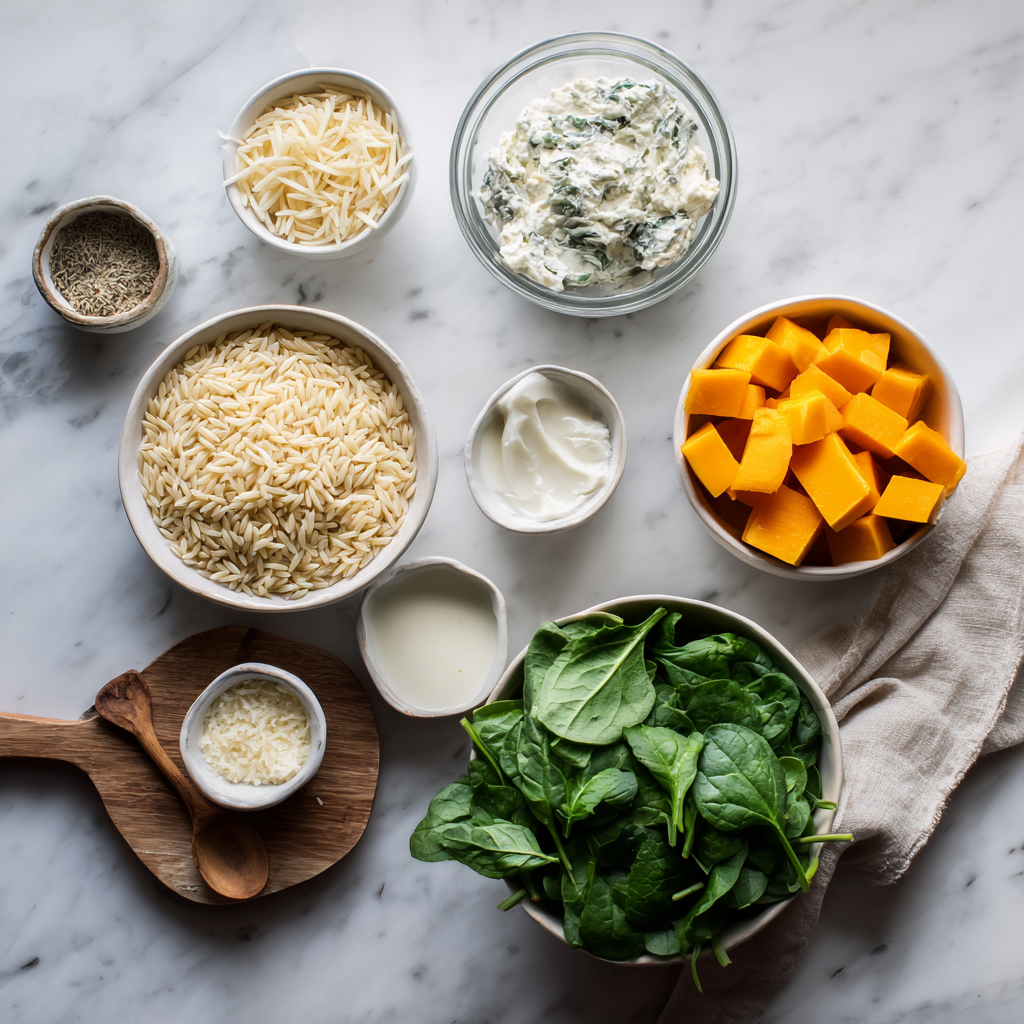
Ingredients List
- The Foundation:
- Orzo Pasta (1.5 cups): Dry.
- Butternut Squash (1 small): Peeled and cubed into 1 cm pieces.
- Fresh Baby Spinach (3 cups): Roughly chopped.
- The Flavor Profile:
- Shallot (1): Finely minced.
- Garlic (3 cloves): Minced.
- Vegetable or Chicken Broth (3 cups): For cooking the orzo.
- Heavy Cream or Mascarpone (1/4 cup): For the silken finish.
- Parmesan Cheese (1/2 cup): Freshly grated.
- The Aromatics:
- Fresh Sage (5–6 leaves): Finely chopped.
- Nutmeg: A tiny pinch.
- Olive Oil: For roasting.
Timing: Parallel Processing
Total time investment: 35 minutes.
- Squash Roasting: 25 minutes.
- Orzo Cooking: 12–15 minutes.
- Assembly: 5 minutes.
Step-by-Step Instructions
Step 1: The Caramelization
Preheat your oven to 200°C (400°F). Toss the butternut squash cubes with olive oil, salt, and pepper. Spread them in a single layer on a baking sheet.
Actionable Advice: Roast for 20–25 minutes until the edges are golden brown. These “browned bits” contain concentrated sugars that provide the deep autumnal flavor.
Step 2: The Aromatic Base
While the squash roasts, heat 1 tablespoon of olive oil in a large skillet over medium heat. Sauté the shallots and garlic for 2–3 minutes until translucent. Add the fresh sage and cook for 1 minute until fragrant.
Step 3: The “Risotto-Style” Simmer
Add the dry orzo to the skillet and toast for 1 minute. Pour in the broth.
- Expert Insight: Unlike boiling pasta in a large pot of water, cooking orzo in just enough broth allows the starch to stay in the pan, creating a natural sauce. Simmer for 10–12 minutes, stirring occasionally, until the liquid is mostly absorbed and the orzo is al dente.
Step 4: The Fold
Stir in the heavy cream (or mascarpone), Parmesan, and nutmeg. Add the fresh spinach.
Pro Tip: The residual heat from the orzo will wilt the spinach in seconds. Do not cook the spinach beforehand, or it will turn “slimy” and lose its bright green color.
Step 5: The Integration
Gently fold in the roasted butternut squash.
- The Final Touch: If the pasta looks too thick, add a splash of warm broth or water to reach your desired creaminess.
Nutritional Information
- Calories: 365 kcal per serving.
- Protein: 12g.
- Total Fat: 14g (Sourced from cream and Parmesan).
- Saturated Fat: 7g.
- Total Carbohydrates: 52g.
- Fiber: 6g (Excellent for digestive health).
- Vitamin A: 250% of Daily Value (from the squash and spinach).
Common Mistakes to Avoid
- Over-roasting the Squash: If the squash becomes too soft, it will turn into a purée when you stir it into the orzo. You want distinct, golden cubes.
- Draining the Orzo: Do not boil the orzo in a separate pot and drain it! You lose the starch needed to make the sauce creamy.
- Skipping the Nutmeg: Even a tiny pinch of nutmeg acts as a bridge between the sweetness of the squash and the saltiness of the Parmesan.
Storing and Reheating
- Storage: Store in an airtight container for up to 3 days.
- Reheating: Pasta absorbs liquid as it sits. When reheating in the microwave or on the stovetop, you must add a splash of water or milk to loosen the sauce and prevent it from being clumpy.
- Serving: This dish is beautiful on its own but pairs exceptionally well with a crisp Sauvignon Blanc or roasted chicken.
Would you like me to create a “Vegan Adaptation Guide” for this recipe using coconut milk and nutritional yeast?