Follow Me On Social Media!
Parmesan Crusted Steak: The “Reverse-Sear” Crust Method


The Science of “Cheese-Binding”
The greatest challenge with a Parmesan crust on steak is the different burning points: beef fat renders beautifully at high heat, but cheese proteins scorch and turn bitter at those same temperatures. In 2026, we solve this with Phased Thermal Crusting:
- The Reverse-Sear: By cooking the steak to near-completion at a low temperature first, we ensure a perfect edge-to-edge medium-rare without overcooking the exterior.
- The “Mustard-Emulsion” Anchor: We use a thin layer of Dijon mustard as a culinary glue. The vinegar and mustard seeds act as an emulsifier, holding the Parmesan crust in place during the high-heat broil while providing an acidic “cut” to the rich steak fat.
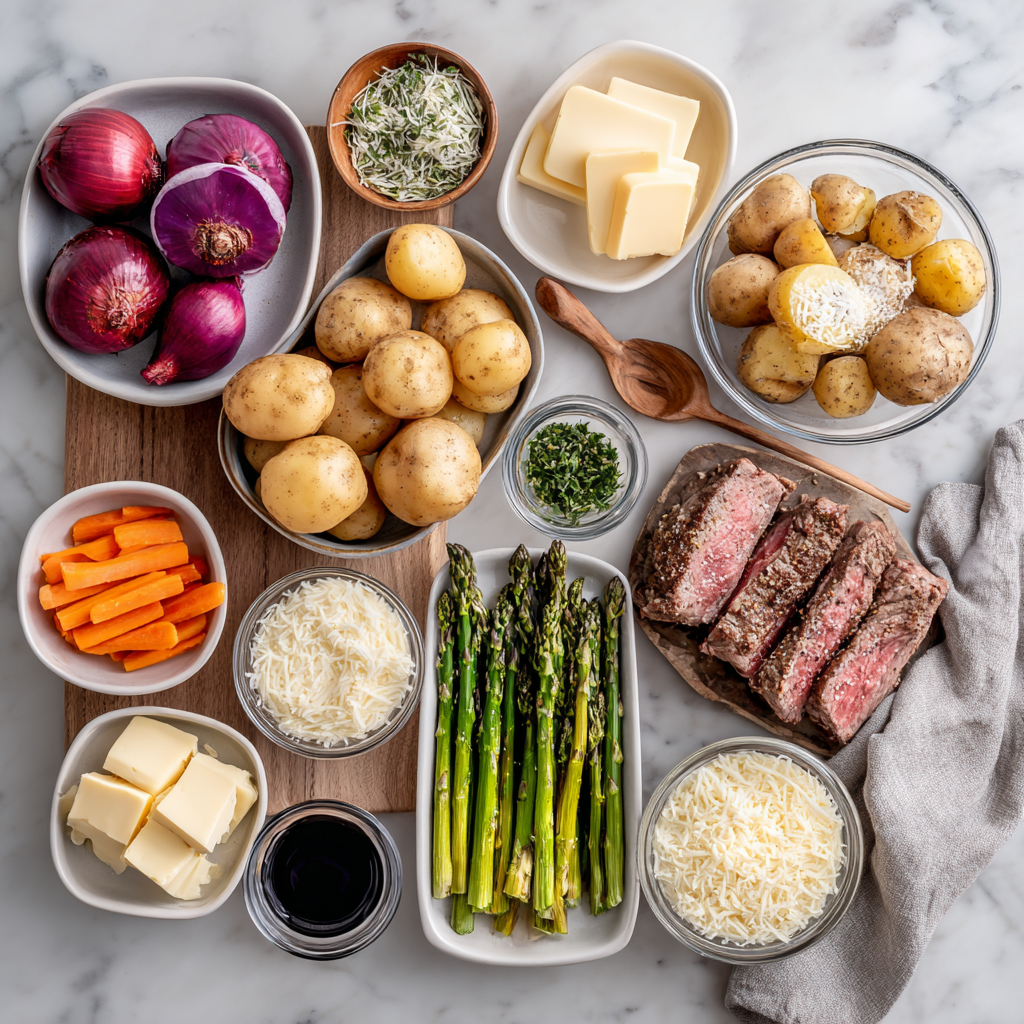
Ingredients List
- The Protein:
- Ribeye or New York Strip (2 steaks, 1.5-inch thick): Thick cuts handle the broiler’s heat better than thin ones.
- The “Armor” (Crust):
- Freshly Grated Parmesan (21 cup): Use the fine side of the grater; large shreds will fall off.
- Panko Breadcrumbs (41 cup): Adds structural “crunch.”
- Garlic Powder (21 tsp).
- Fresh Parsley (1 tbsp): Finely minced.
- The Bind:
- Dijon Mustard (1 tbsp).
- Unsalted Butter (1 tbsp): Melted.
Timing: The “Precision” Roast
- Prep: 10 minutes.
- Low-Heat Bake: 30–45 minutes.
- The Broil: 2–4 minutes.
Step-by-Step Instructions
Step 1: The Low-and-Slow Start
Preheat your oven to 225°F (107°C). Season your steaks liberally with salt and pepper. Place them on a wire rack over a baking sheet. Bake until the internal temperature reaches 115°F (46°C) for a medium-rare target.
Step 2: The Crust Synthesis
While the steak bakes, mix the Parmesan, Panko, garlic powder, parsley, and melted butter in a small bowl. The texture should feel like wet sand.
Step 3: The “Glue” Application
Remove the steaks from the oven and switch the oven to Broil (High). Move the oven rack to the top third position. Brush a very thin, even layer of Dijon mustard over the top surface of each steak.
Step 4: The Pressure Pack
Press the Parmesan mixture firmly onto the mustard-coated side of the steak.
Actionable Advice: Use the flat of your hand to “pack” the crust. If it’s loose, the broiler’s fan will blow the crumbs off before they can brown.
Step 5: The “Golden Hour” Broil
Place the steaks back under the broiler for 2–4 minutes.
- The Visual Check: You are not looking for a specific time, but a specific color. Pull the steaks the second the crust is deep golden brown and bubbling.
Common Mistakes to Avoid
- Using “Green Can” Cheese: Pre-shaken Parmesan contains cellulose to prevent clumping, which also prevents it from melting into a cohesive crust. Only use fresh-grated.
- Skipping the Rest: Even with a crust, steak needs to rest. Let it sit for 5–8 minutes before slicing so the juices stay in the meat and don’t soggy up your bottom crust.
- Over-Salting: Remember that Parmesan is naturally very salty. Reduce your initial salt seasoning on the meat by about 25% to compensate.
3 Modern Pairings for 2026
| Side Dish | Why it Works |
| Balsamic Glazed Brussels | The sweetness balances the salty, umami-heavy steak. |
| Truffle Mashed Potatoes | Truffle and Parmesan are a classic 2026 flavor bridge. |
| Arugula & Lemon Salad | The peppery greens and acid “cleanse” the palate between bites. |
Would you like me to help you adjust the “Low-and-Slow” timing if you are using a thinner cut like a Flank or Skirt steak?
Gemini can make mistakes, so double-check it