Follow Me On Social Media!
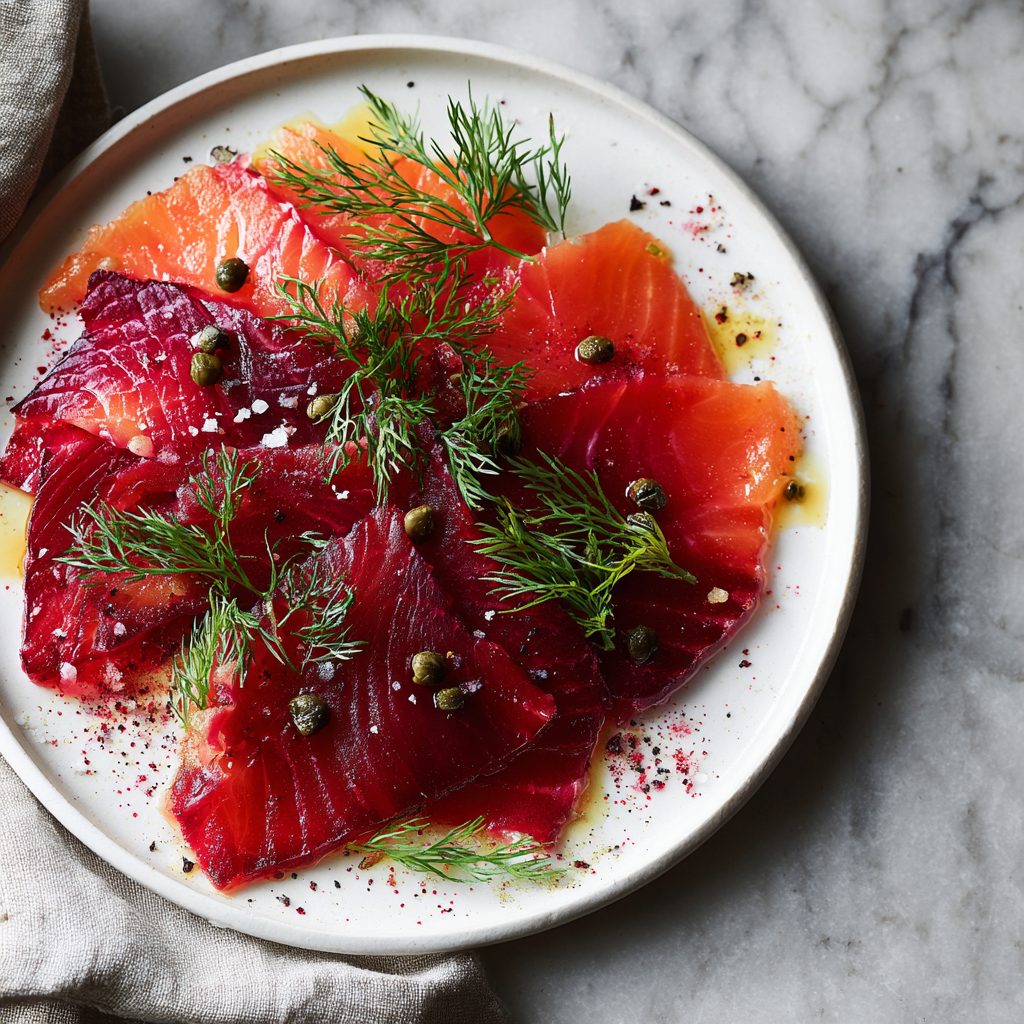
Beetroot Cured Salmon: The Art of “Osmotic Coloration”

The Science of the Cure
Beetroot-cured salmon (often called Beetroot Gravlax) is a stunning display of osmosis and natural pigmentation. When you coat raw salmon in a mixture of salt, sugar, and grated beets:
- Curing: The salt draws moisture out of the fish, denaturing the proteins to create a firm, silky texture while inhibiting bacterial growth.
- Staining: The betalain pigments in the beetroot—which are highly water-soluble—travel with the brine deep into the outer layers of the fish.
This results in a vibrant, “electric” purple gradient on the outside that contrasts beautifully with the deep orange of the salmon’s interior.

Ingredients List
- The Fish:
- Sushi-Grade Salmon Fillet (1 lb): Center-cut, skin-on. High quality is vital since the fish is not “cooked” with heat.
- The Cure Base:
- Kosher Salt (21 cup): Coarse grains are best for even moisture extraction.
- Granulated Sugar (21 cup): Balances the salt and keeps the flesh tender.
- The Botanical Stain:
- Raw Beetroot (1 large): Peeled and finely grated.
- Horseradish (1 tbsp): Freshly grated (optional, for a spicy “bite”).
- Lemon Zest (from 1 lemon).
- Fresh Dill (1 large bunch): Roughly chopped.
- Whole Black Peppercorns (1 tsp): Crushed.
Timing: The Patience of the Polish
- Prep: 15 minutes.
- Curing Time: 24 to 36 hours. (Don’t rush it!)
Step-by-Step Instructions
Step 1: Prepare the Salmon
Check the salmon for pin bones and pat it completely dry with paper towels. Drying the surface ensures the salt starts working immediately.
Step 2: Mix the Cure
In a bowl, combine the salt, sugar, grated beets, horseradish, lemon zest, and pepper. The mixture should look like bright purple “wet sand.”
Step 3: The “Deep Freeze” Wrap
- Lay a large piece of plastic wrap on a tray.
- Spread half of the dill and half of the beet mixture on the wrap.
- Place the salmon skin-side down on the mixture.
- Pack the remaining beet mixture and dill on top of the flesh.
- Wrap the fish tightly in several layers of plastic wrap.
Step 4: Weighted Compression
Place the wrapped salmon in a shallow dish. Set a second dish or a small cutting board on top and weigh it down with a few heavy cans or a brick.
Actionable Advice: The weight forces the brine into the fibers, ensuring a more uniform cure and a tighter, professional texture. Refrigerate for 24–36 hours.
Step 5: The Reveal
Unwrap the salmon and discard the purple sludge. Rinse the fillet quickly under cold water to remove excess salt and beet bits, then pat dry.
Pro-Tips for the Perfect Slice
- The Angle: Use a long, thin, sharp knife (a “slicing knife”). Slice at a sharp 45° angle against the grain to create translucent, wide ribbons.
- The Skin: Slice down to the skin, but do not cut through it. Slide the knife along the skin to release each slice.
- Color Contrast: Serve on dark pumpernickel bread or white blinis to make the purple edges “pop.”
Common Mistakes to Avoid
- Using Pre-Cooked Beets: Canned or boiled beets won’t work. You need the raw enzymes and fresh juices of a raw beet to achieve that signature neon stain.
- Over-Curing: If you leave the salmon in the salt for more than 48 hours, it will become overly salty and tough (approaching “jerky” territory).
- Table Salt: Never use fine table salt; it will absorb too quickly and make the fish inedibly salty.
Would you like me to suggest a “Mustard-Dill Sauce” recipe to serve alongside your vibrant salmon?