Follow Me On Social Media!
Classic Marble Cake: The Perfect Structural Symbiosis

Can a Cake Be Two Things at Once?
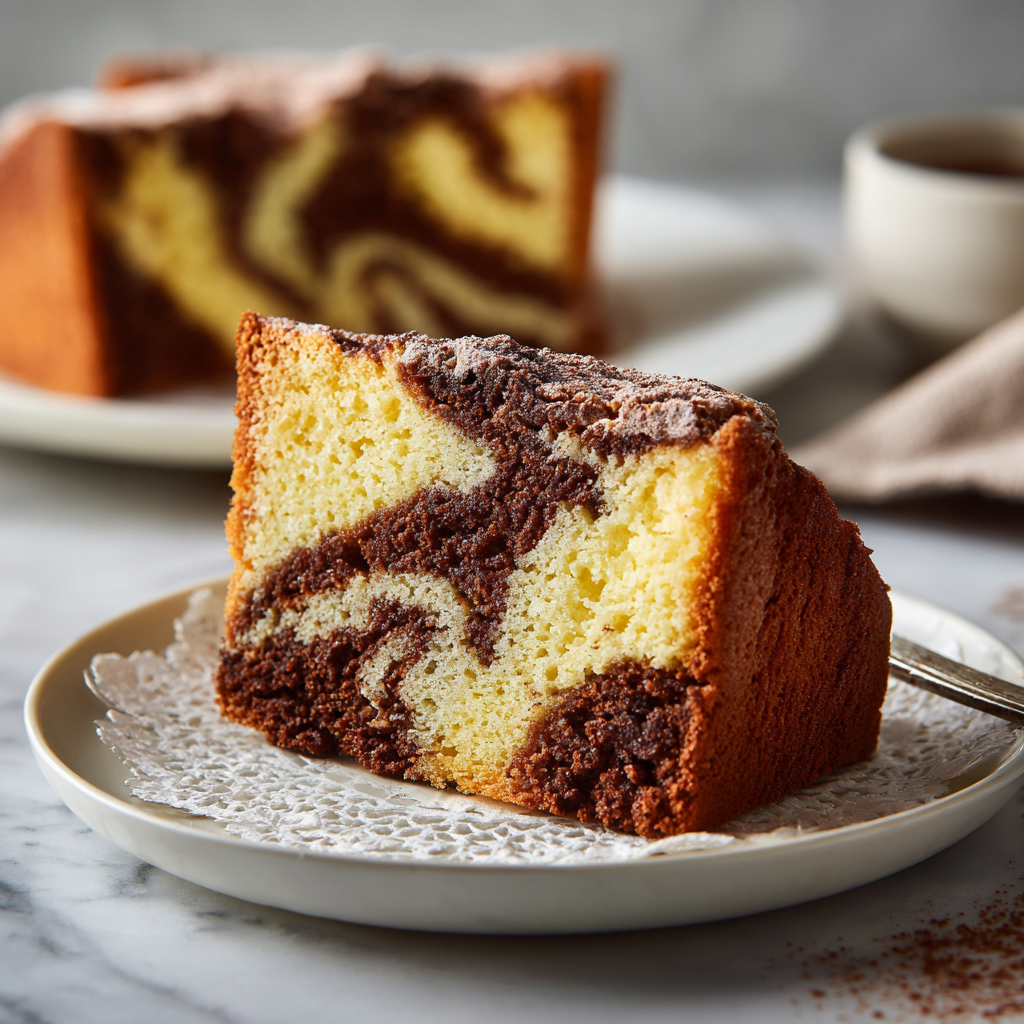
Did you know that the “Marble Cake” first gained global popularity in 19th-century Germany as Marmorkuchen? The architectural appeal of the dish lies in the density parity—the goal is to create a chocolate batter and a vanilla batter that have identical weights and moisture levels. If one is heavier, it will sink to the bottom, ruining the aesthetic. If you’ve been searching for a loaf that provides the buttery comfort of vanilla with the sophisticated bitterness of cocoa, this Classic Marble Cake is the answer. By using the “alternating scoop” method, we ensure that every slice reveals a unique, topographical map of flavor.
Ingredients List
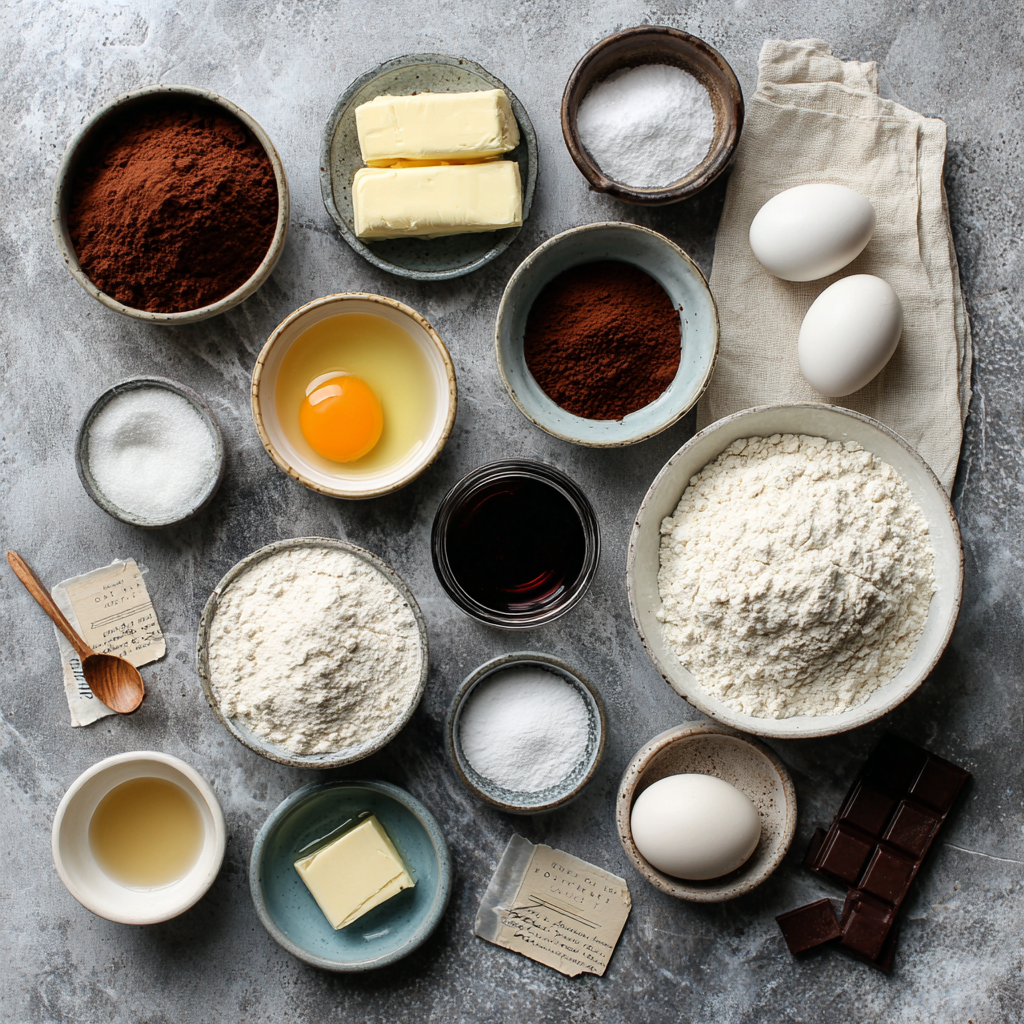
To master the Classic Marble Cake, you must use high-fat dairy to ensure the cocoa doesn’t dry out the chocolate sections.
- For the Universal Base:
- All-Purpose Flour (2 cups): Sifted twice for a fine, velvet crumb.
- Granulated Sugar (1 cup): To provide a neutral sweetness.
- Unsalted Butter (3/4 cup): Room temperature (softened).
- Whole Milk (1/2 cup): Acts as the primary hydrating agent.
- Large Eggs (3): Room temperature for stable emulsification.
- Baking Powder (2 tsp) & Salt (1/2 tsp).
- Vanilla Bean Paste (2 tsp): To anchor the vanilla side.
- For the Chocolate Transformation:
- Dutch-Processed Cocoa Powder (1/4 cup): For a dark, rich contrast.
- Warm Water (2 tbsp): To “bloom” the cocoa and match the vanilla batter’s density.
Timing: Efficiency and Thermal Set
Total time investment: 1 hour and 15 minutes.
- Prep Time: 20 minutes.
- Bake Time: 45–55 minutes.
- Cooling Time: 10 minutes (in the pan).
Step-by-Step Instructions
Step 1: The Creaming Foundation
Preheat your oven to 175°C (350°F). In a stand mixer, beat the softened butter and sugar for 5 minutes until it looks like whipped cream. Add the eggs one at a time, followed by the vanilla.
Step 2: The Dry and Wet Fold
Alternately add the sifted flour (with baking powder/salt) and the milk to the butter mixture. Mix until just combined.
Pro Tip: Over-mixing at this stage creates gluten tunnels, which will make your “marble” look like streaks of bread rather than cake.
Step 3: The Chocolate Split
Transfer one-third of the batter to a separate bowl. In a small cup, whisk the cocoa powder and warm water into a paste, then fold it into the smaller portion of batter.
- Expert Insight: Adding the water to the cocoa is vital. Cocoa is a drying agent; without the extra water, the chocolate swirls would be tougher than the vanilla sections.
Step 4: The Strategic Swirl
Grease a 9×5 inch loaf pan. Place large dollops of vanilla batter in the pan, followed by dollops of chocolate batter on top. Repeat the layers.
Actionable Advice: Take a butter knife and swirl it through the batter in a “figure-8” motion exactly three times. Any more than that, and the colors will blend into a muddy brown instead of distinct swirls.
Step 5: The Bake
Bake for 45–55 minutes. The cake is done when a skewer inserted into the center comes out clean or with a few dry crumbs.
Nutritional Information
- Calories: 280 kcal per slice (based on 10 slices).
- Total Fat: 15g (primarily from the butter).
- Saturated Fat: 9g.
- Total Carbohydrates: 34g.
- Sugars: 20g.
- Protein: 4g.
- Iron: 8% of Daily Value (sourced from the cocoa powder).
Common Mistakes to Avoid
- Cold Eggs: Cold eggs will “shock” the creamed butter, causing the batter to curdle and the cake to be dense.
- The “Over-Swirl”: It is tempting to keep mixing the two colors, but the beauty of a marble cake is in the bold, thick sections of color.
- Skipping the Cocoa Bloom: If you add dry cocoa powder to the batter, it will be lumpy and the chocolate cake will be dry.
Storing and Serving
- Storage: This cake is famous for its shelf life. Wrap it in foil or plastic wrap; it stays moist for up to 5 days at room temperature.
- The “Coffee Pairing”: This cake was designed for dipping. A light-roast coffee complements the vanilla, while a dark espresso amplifies the Dutch cocoa.
Would you like me to create a “Glaze Variation Guide” with recipes for a Chocolate Ganache or a Simple Lemon Drizzle?