Follow Me On Social Media!
Gingerbread Crinkle Cookies: The Ultimate Holiday Texture Play

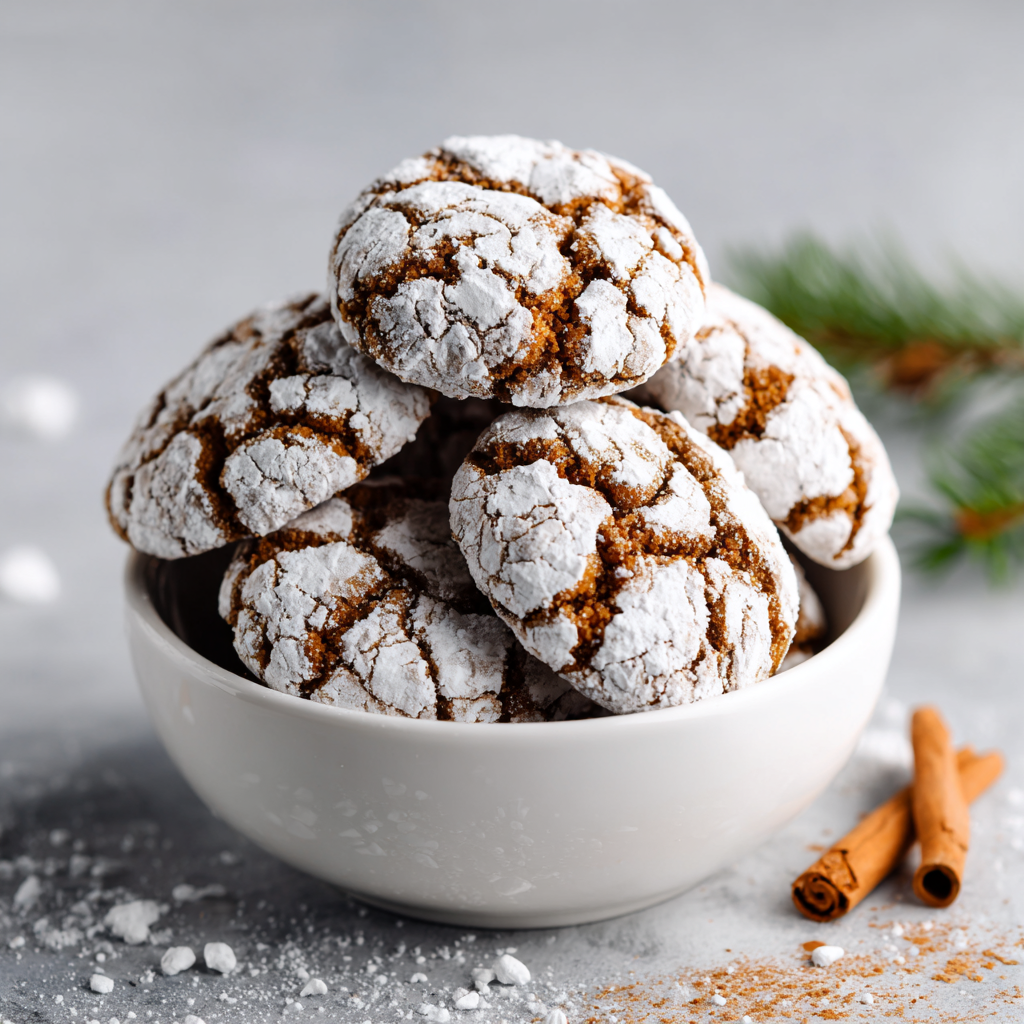
Can a Single Cookie Solve the “Soft vs. Crunchy” Debate?
Did you know that according to sensory analysis in baking, the “crinkle” effect is caused by a specific moisture-to-sugar ratio that forces the surface to dry out and crack while the interior remains soft? This is a physical phenomenon known as surface tension failure. While many believe that gingerbread must be a stiff, snap-style biscuit, the Gingerbread Crinkle Cookie challenges that notion. If you have been searching for a holiday treat that offers a snowy, powdered sugar exterior with a fudgy, molten-molasses center, this is your answer. By leveraging the hygroscopic nature of molasses, we create a cookie that is semantically perfect for the winter season: warm, spiced, and visually stunning.
Ingredients List
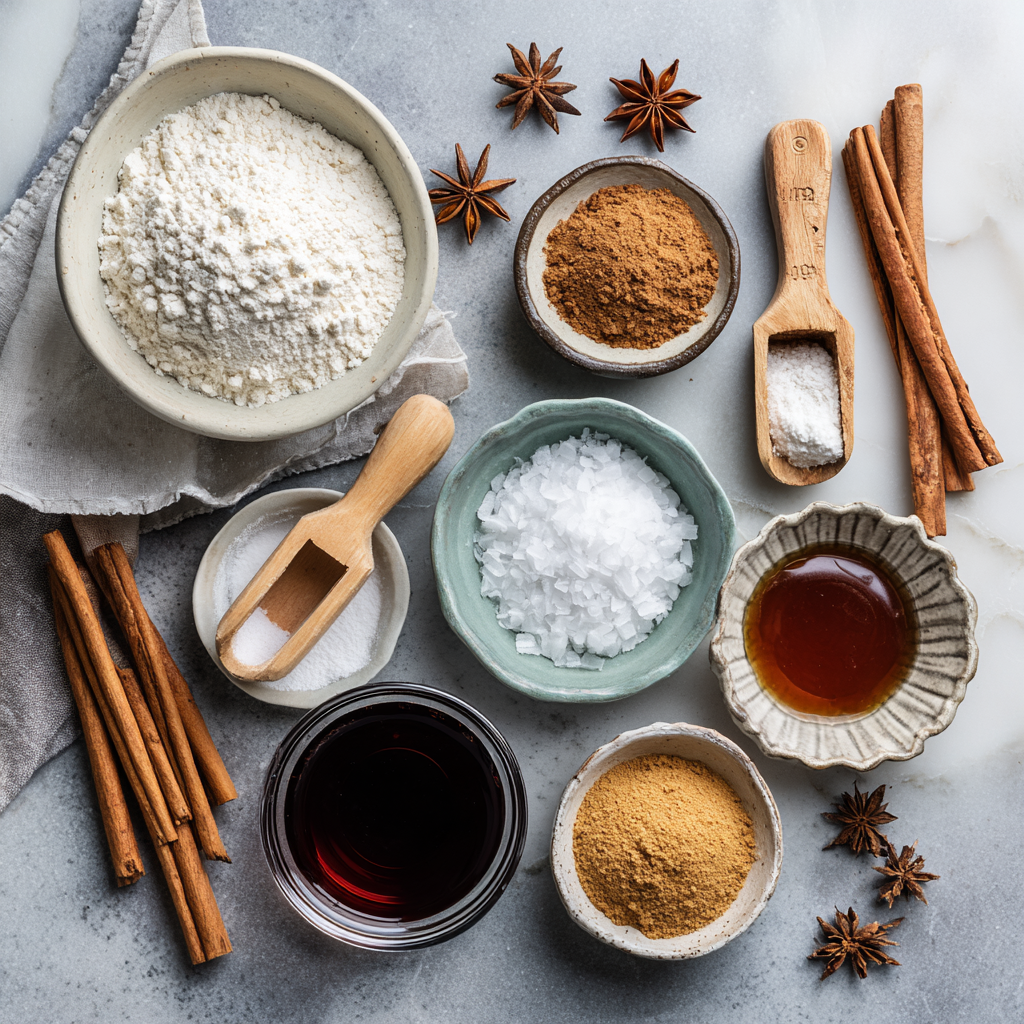
To master the Gingerbread Crinkle Cookie, the quality of your molasses and the temperature of your dough are the most critical variables.
- All-Purpose Flour (3 cups): Provides the necessary structure for the “crack.”
- Unsalted Butter (3/4 cup): Softened. Butter is the vehicle for the holiday spices.
- Unsulfured Molasses (1/2 cup): The key to a chewy, dark interior. Avoid Blackstrap as it is too bitter.
- Brown Sugar (1 cup): Light or dark; packed.
- Large Egg (1): Room temperature for better emulsification.
- Spices: 2 tsp ground ginger, 1 tsp cinnamon, and 1/2 tsp ground cloves.
- Baking Soda (2 tsp): Essential for the rapid expansion that creates the “crinkles.”
- Fine Sea Salt (1/2 tsp): To balance the deep sweetness.
- Coating: 1/2 cup Granulated Sugar and 1/2 cup Powdered Sugar (placed in separate bowls).
Timing: The Importance of the Chill
Total time investment: 2 hours and 30 minutes (mostly inactive).
- Prep Time: 15 minutes.
- Chilling Time: 2 hours (minimum).
- Bake Time: 10–12 minutes.
Step-by-Step Instructions
Step 1: Creaming the Base
Cream the softened butter and brown sugar together until light and fluffy (about 3 minutes). Beat in the egg and molasses until the mixture is dark, glossy, and fully combined.
Step 2: Sifting the Spices
In a separate bowl, whisk together the flour, baking soda, ginger, cinnamon, cloves, and salt.
Pro Tip: Sifting these dry ingredients ensures that you don’t end up with a “ginger bomb”—a pocket of unmixed spice that can be overwhelmingly hot.
Step 3: The Integration
Slowly mix the dry ingredients into the wet until a thick, sticky dough forms. Wrap the dough tightly in plastic wrap and refrigerate for at least 2 hours.
Step 4: The Double-Roll Technique
Scoop 1-inch balls of dough. First, roll the ball in granulated sugar, then immediately roll it in powdered sugar.
- Expert Insight: The granulated sugar layer creates a dry barrier that prevents the powdered sugar from absorbing into the dough. This ensures your “snow” stays bright white and visible after baking.
Step 5: The Bake
Place the balls on a parchment-lined sheet 2 inches apart. Bake at 350°F for 10–12 minutes.
Actionable Advice: Do not overbake! The cookies should look slightly “wet” in the cracks when they come out. They will set on the hot pan and stay fudgy inside.
Nutritional Information
Iron: 6% of Daily Value, sourced primarily from the molasses.
Calories: 145 kcal per cookie.
Total Fat: 6g, providing a rich, buttery mouthfeel.
Saturated Fat: 3.5g.
Total Carbohydrates: 22g of quick-release energy.
Sugars: 14g.
Protein: 1.5g.
Sodium: 110mg.
Common Mistakes to Avoid
Using Warm Dough: If the dough is warm, the cookies will spread too fast, and the “cracks” won’t have time to form properly.
Skipping the Granulated Sugar: If you only use powdered sugar, it will likely melt into the cookie, leaving you with a mottled grey surface rather than a sharp white crinkle.
Old Baking Soda: If your baking soda is older than 6 months, the cookies won’t expand rapidly enough to break the surface tension, resulting in smooth-topped cookies.
Storing and Reheating
Freezing: You can freeze the rolled (but unbaked) dough balls for up to 3 months. Bake them directly from frozen, adding 2 minutes to the cook time.
Storage: Store in an airtight container for up to 1 week. These cookies actually get softer and more flavorful after 24 hours as the spices meld.
- The Refresh: If the powdered sugar looks dull after a few days, a very light dusting of fresh powdered sugar can revive them, though the contrast won’t be as sharp as day one.
Would you like me to help you create a “Cookie Swap Guide” with tips on how to package these for gifting without ruining the powdered sugar?