Follow Me On Social Media!
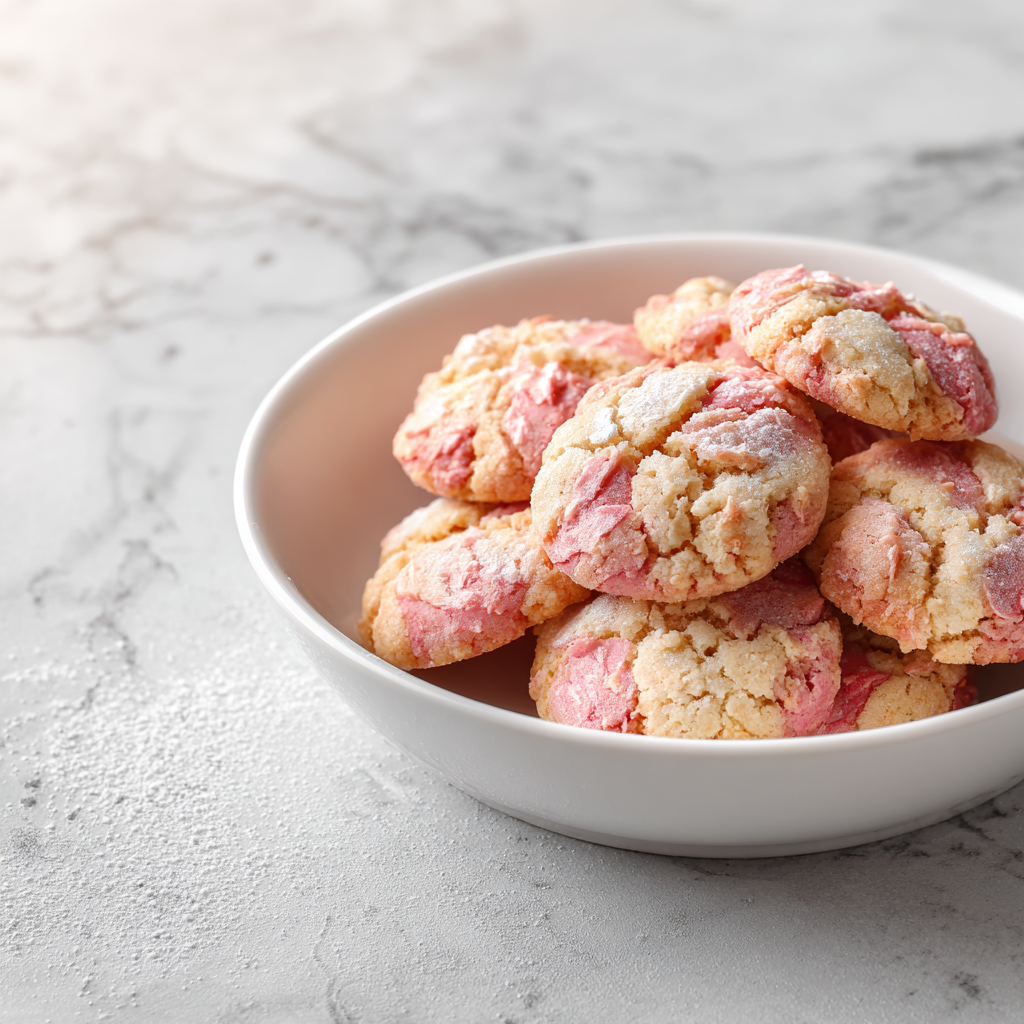
Cherry Blossom Cookies: The Ultimate Guide to Edible Floral Shortbread

Introduction
Did you know that global interest in “botanical baking” has surged by 135% over the last three years? As home bakers look to move beyond basic vanilla and chocolate, the allure of edible flowers has taken center stage. Yet, for many, the idea of baking with flowers feels intimidated or purely decorative.
These Cherry Blossom Cookies (often known as Sakura Cookies in Japan) challenge the belief that cookies must be overly sweet to be satisfying. Instead, they rely on a sophisticated interplay of salty and sweet—a concept known in culinary science as “flavor layering.” By using real salted cherry blossoms, we create a shortbread that is buttery, crumbly, and perfumed with the subtle, almond-like fragrance of spring.
In this guide, we will explore the unique ingredient sourcing required for this recipe, the technique for desalting preserved flowers, and how to bake these cookies at the precise temperature to preserve their delicate pink hue.
Ingredients List
To achieve the authentic taste of Japanese spring, specific ingredients are non-negotiable. Here is the breakdown of what you need for the perfect floral shortbread.
- Salted Cherry Blossoms (Sakura-zuke) – 30g:
- The Star: These are edible cherry blossoms preserved in salt and plum vinegar. They provide the signature look and a unique salty-sour counterpoint to the sugar.
- Sourcing: Available at Japanese markets or online specialty retailers.
- Unsalted Butter (1 stick / 115g):
- Quality Matter: Use high-fat European butter (82% fat or higher). Since shortbread has no eggs to hide behind, the quality of the butter dictates the flavor profile.
- Confectioners’ Sugar (40g / ⅓ cup):
- Texture: Unlike granulated sugar, powdered sugar contains cornstarch, which ensures a “melt-in-your-mouth” tender texture rather than a crisp snap.
- All-Purpose Flour (130g / 1 cup):
- Protein: Standard AP flour provides just enough structure.
- Almond Flour (20g / 2 tbsp):
- Secret Ingredient: Adds a subtle nuttiness that mirrors the natural chemical compounds found in cherry blossoms (coumarin).
- Egg Yolk (1 large):
- Role: Adds richness and helps bind the dough without adding too much moisture.
Timing
Baking shortbread is a lesson in patience. The “active” time is short, but the resting time is non-negotiable for holding shape.
- Prep Time: 25 minutes
- Soaking Time: 15 minutes (for the blossoms)
- Chilling Time: 60 minutes
- Cooking Time: 12–14 minutes
- Total Time: Approximately 1 hour and 55 minutes.
- Data Insight: While this seems long, 60% of the time is passive. This recipe is perfect for “interstitial baking”—doing chores or working while the dough chills.
Step-by-Step Instructions
Step 1: Prepare the Blossoms (H3)
Place your salted cherry blossoms in a bowl of lukewarm water for 15 minutes.
- Why this matters: You must remove the excess brine. If you skip this, the cookies will be inedibly salty.
- Action: After soaking, gently pat them dry with paper towels. Select the prettiest blossoms to press on top, and finely chop the remaining broken pieces to mix into the dough.
Step 2: Cream the Butter and Sugar (H3)
In a mixing bowl, beat the softened butter and confectioners’ sugar until pale and smooth (about 3 minutes).
- Sensory Cue: You aren’t looking for “fluffy” (which incorporates too much air and causes spreading); you just want “creamy and combined.” Add the egg yolk and beat until incorporated.
Step 3: The Dry Mix (H3)
Sift the all-purpose flour and almond flour into the butter mixture. Add the chopped cherry blossoms here.
- Technique: Use a silicone spatula to fold the mixture. Do not overwork it. Stop as soon as a cohesive dough forms. Overworking develops gluten, transforming your tender shortbread into a tough cracker.
Step 4: Shape and Chill (H3)
Roll the dough into a log (cylinder) about 2 inches in diameter. Wrap tightly in plastic wrap or parchment paper.
- Chill: Refrigerate for at least 1 hour.
- Baker’s Tip: To keep the log perfectly round, cut a paper towel tube down the center and rest your wrapped dough log inside it while it chills. This prevents a flat bottom.
Step 5: Slice and Decorate (H3)
Preheat oven to 325°F (160°C). Remove the dough log and slice into ¼-inch thick rounds. Place on a parchment-lined baking sheet.
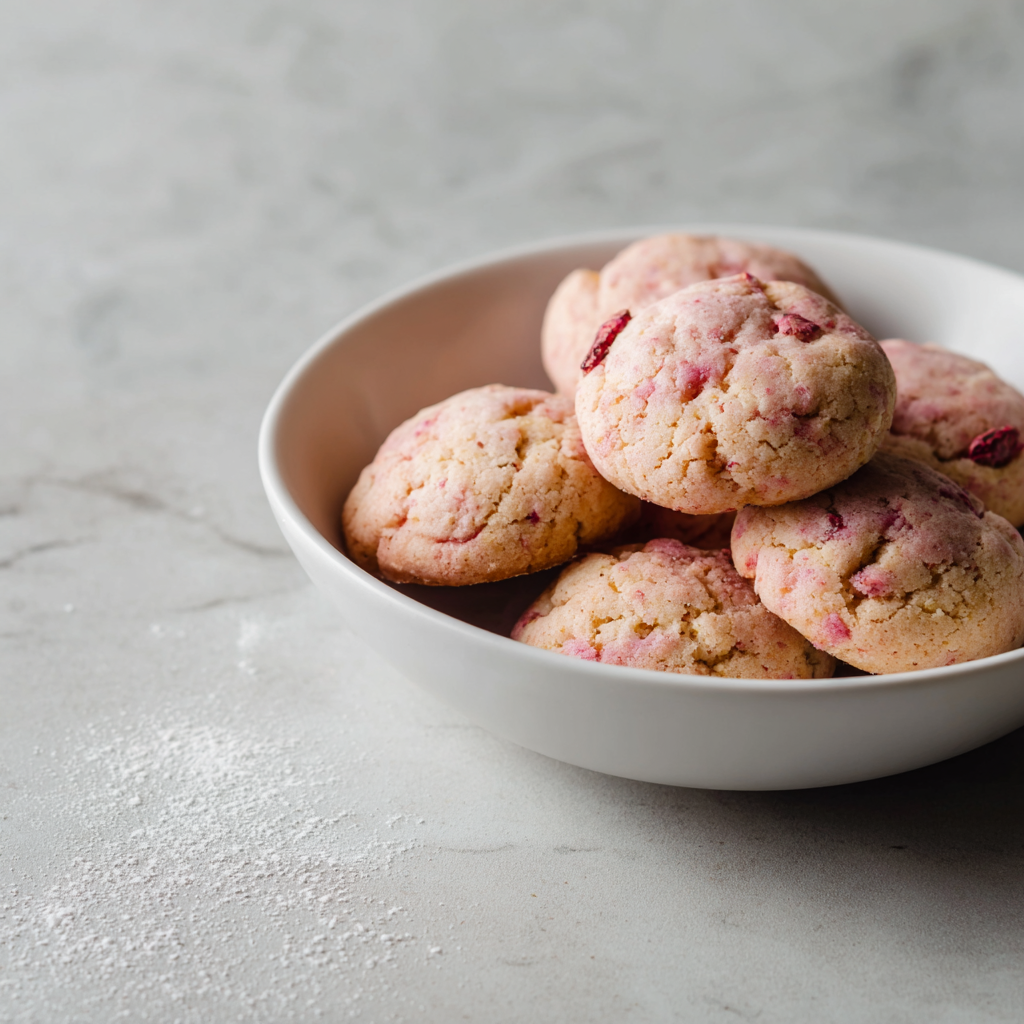
- The Artistic Touch: Gently press one whole, dried cherry blossom into the center of each cookie.
Step 6: The Low-Temp Bake (H3)
Bake for 12–14 minutes.
- Critical Visual: You want the cookies to remain pale. Do not let them turn golden brown. If the edges start browning, they are overdone. The goal is a soft, pale aesthetic that highlights the pink flower.
Nutritional Information
Shortbread is calorie-dense due to the butter content, but the portion sizes are typically smaller.
- Serving Size: 1 Cookie
- Calories: ~75 kcal
- Total Fat: 5g
- Saturated Fat: 3g
- Carbohydrates: 7g
- Sugar: 2g
- Protein: 1g
- Data Insight: Incorporating almond flour increases the Vitamin E content slightly, but this is primarily an indulgent treat.
Healthier Alternatives for the Recipe
Botanical baking can be adapted for various dietary lifestyles without losing the floral essence.
- Gluten-Free:
- Swap: Replace the AP flour with a high-quality 1:1 Gluten-Free Flour Blend (look for one containing rice flour). Shortbread adapts very well to gluten-free flour because it relies low-gluten formation anyway.
- Vegan / Dairy-Free:
- Swap: Use a high-quality plant-based butter block (not tub margarine). Omit the egg yolk and add 1 teaspoon of cornstarch to help binding.
- Lower Sugar:
- Swap: Powdered Erythritol or Monk Fruit sweetener works as a 1:1 substitute for confectioners’ sugar. The texture may be slightly more brittle (sandy), which some actually prefer in shortbread.
Serving Suggestions
The delicate flavor of cherry blossoms can be easily overpowered. Pairing is essential.
- The Traditional Route: Serve with hot Sencha (Japanese Green Tea) or Matcha. The grassy bitterness of the tea cuts through the butter and harmonizes with the floral notes.
- The Afternoon Tea: These make a stunning addition to a tiered tray alongside cucumber sandwiches.
- The Texture Contrast: Serve alongside a light, citrus-based sorbet (like Yuzu or Lemon). The crisp cookie contrasts beautifully with the melting sorbet.
- Gifting: Stack them in clear cellophane bags tied with pink ribbon. They are sturdy enough to mail, making them excellent gifts.
Common Mistakes to Avoid
Here is why most people fail at their first attempt with Sakura cookies.
- Skipping the Soak:
- The Pitfall: Using the flowers straight from the package.
- The Result: A cookie that tastes like a salt lick. You must soak the brine off.
- High Oven Temperature:
- The Pitfall: Baking at 350°F or 375°F.
- The Result: The cookies brown rapidly, ruining the delicate pink-on-white aesthetic. Keep it low (325°F) and watch them like a hawk.
- Using Granulated Sugar:
- The Pitfall: Using table sugar instead of powdered.
- The Result: A gritty texture. Shortbread relies on the fineness of powdered sugar for that “melting” sensation.
Storing Tips for the Recipe
Shortbread actually improves with age as the moisture redistributes.
- Room Temperature: Store in an airtight metal tin (plastic can sometimes soften them too much) for up to 1 week.
- Freezing Dough: The unbaked dough log can be frozen for up to 3 months. Just thaw for 20 minutes before slicing and baking.
- Freezing Baked Cookies: They freeze well. Layer them with parchment paper to prevent the flowers from falling off.
Conclusion
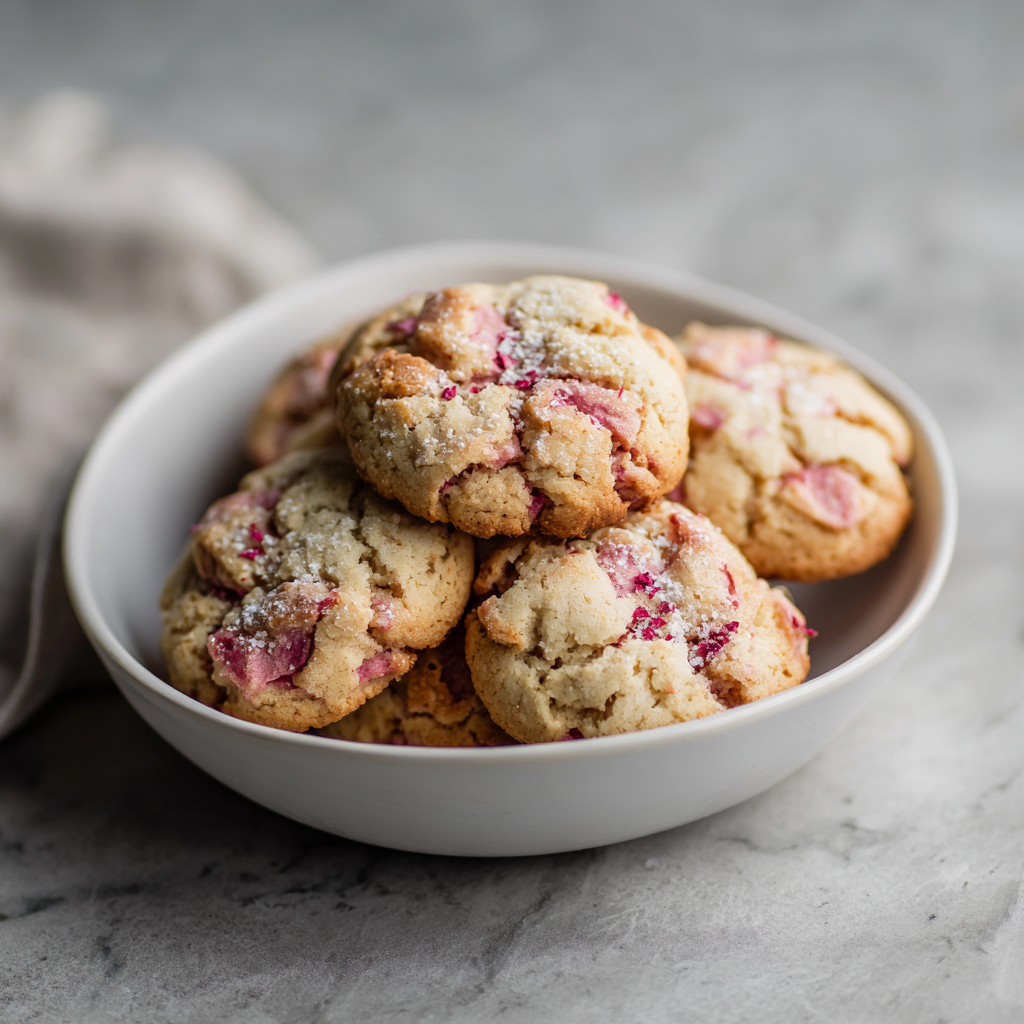
Cherry Blossom Cookies are more than just a sweet treat; they are an edible celebration of spring and a testament to the elegance of Japanese culinary aesthetics. With a simple shortbread base and the showstopping addition of preserved sakura, you can create a bakery-quality dessert that looks as good as it tastes.
Ready to bring spring into your kitchen? Order your salted cherry blossoms today and try this recipe. We would love to see your creations—tag us on Instagram with your photos! If you enjoyed this botanical baking guide, subscribe to our newsletter for more exotic flavor explorations.
FAQs
What do Cherry Blossom Cookies taste like?
Authentic Sakura cookies have a sophisticated flavor profile. They are buttery and sweet like shortbread, but the blossom adds a floral aroma similar to rose, mixed with a distinct note of almond or coumarin, and a lingering salty kick from the preservation brine.
Where can I buy salted cherry blossoms?
You likely won’t find these at a standard grocery store. Look for them at local Japanese supermarkets (often in the tea or pickle section) or order them online from retailers like Amazon or specialty baking shops. Search for “Sakura-zuke.”
Can I use cherry extract instead?
If you cannot find blossoms, you can use cherry extract and pink food coloring. However, note that “Cherry Extract” usually tastes like fruity red cherries (the fruit), whereas “Sakura” tastes floral. It will result in a delicious cookie, but a different flavor profile.
Why did my cookies spread too much?
Spreading usually happens if the butter was too warm when mixing, or if the dough wasn’t chilled long enough. Ensure your dough log feels rock-hard before you slice it. If it feels soft, put it back in the fridge.